



“What happens to this debt if I die?”
It’s the uncomfortable question many borrowers avoid when signing a loan agreement. Whether it’s for medical emergencies, tuition fees, home repairs, or business capital, most Filipinos focus only on getting approved and managing monthly payments. Few stop to consider what happens if the family breadwinner suddenly passes away or becomes permanently disabled before the loan is fully paid.
For many Filipino households, that risk is very real. In a country where millions of families rely on a single income earner—including OFWs, freelancers, and small business owners—the loss of income can trigger a financial crisis overnight. The tragedy becomes even heavier when grieving families are left with unpaid debt obligations, collection calls, and the threat of losing assets.
This is where loan and insurance bundling becomes more than just a financial product—it becomes a protection strategy.
Instead of applying for a loan first and worrying about insurance later, bundled loan and insurance products combine borrowing and protection into one coordinated solution. If something happens to the borrower, the insurance coverage can settle the remaining balance, shielding the family from financial ruin.
Today, more lenders and financial marketplaces are offering loan + insurance bundles because they simplify protection, reduce risks, and provide peace of mind for both borrowers and lenders. For Filipino families trying to build financial stability, that combination may be one of the smartest financial decisions they can make.

The Unspoken Risk Behind Every Loan
Most borrowers assume debt disappears after death. Unfortunately, that’s not how it works.
Personal loans, salary loans, and many other credit obligations become part of a borrower’s estate liabilities. This means unpaid balances can affect the assets left behind for surviving family members. In some cases, co-makers, guarantors, or spouses may also become legally or financially responsible for repayment.
For families already dealing with grief, this creates a painful second burden.
Imagine a household where the father took out a ₱300,000 personal loan to renovate their home and support school expenses. Monthly payments were manageable while he was employed. But after a sudden illness led to his passing, the loan remained unpaid. His wife—already struggling emotionally—was left dealing with loan notices, collection pressure, and the possibility of selling family assets to settle the balance.
This situation is more common than many Filipinos realize.
A major issue is the protection gap. Many borrowers still apply for loans without any form of loan-linked insurance. Some skip it to save money, while others simply don’t understand how credit life insurance works. The result is a dangerous financial blind spot: families are protected emotionally by love and support, but not financially by proper planning.
The reality is simple: debt doesn’t disappear just because income does.
That’s why integrating insurance into the borrowing process matters.

Credit Life Insurance 101
Credit life insurance is one of the most overlooked financial protections in the Philippines.
At its core, credit life insurance is designed to pay off the remaining loan balance if the borrower dies or becomes permanently disabled during the loan term. Instead of passing the obligation to surviving family members, the insurer settles the unpaid debt directly with the lender.
For lenders, this reduces default risk and protects the stability of their loan portfolio.
For borrowers, it protects the people who matter most.
How Credit Life Insurance Works
When a borrower applies for a loan, the lender may offer optional or bundled insurance coverage linked to that specific loan. If approved, the insurance stays active for the duration of the loan term.
If a covered event happens:
- The insurance provider pays the outstanding balance
- The family no longer needs to continue payments
- Assets are protected from forced liquidation
- Co-makers avoid financial strain
Some policies also include additional features such as temporary payment waivers during hospitalization or disability recovery periods.
Typical Coverage and Costs
Most credit life insurance plans cover:
The cost is usually affordable compared to the total loan amount.
In many cases, the premium is either:
- Added as a one-time fee
- Spread across monthly payments
- Automatically bundled into the loan package
Compared to the financial devastation an unpaid loan can create, the added cost is often minimal.

The Bundling Advantage
Applying for loans and insurance separately may seem flexible, but bundling them through one platform often creates better financial protection.
1. Lower Overall Costs
Bundled products are often cheaper than buying separate policies individually. Because lenders and insurers work together, borrowers may receive discounted premiums or simplified pricing structures.
In many cases, bundled coverage can be 10–20% cheaper compared to standalone policies.
2. Easier Approval Process
Traditional insurance applications can require:
- Medical exams
- Extensive paperwork
- Income verification
- Long underwriting periods
Loan-linked insurance usually simplifies this process, especially for smaller loans under ₱500,000. Many borrowers qualify without undergoing medical examinations.
This makes protection far more accessible to ordinary Filipino families.
3. Better Coverage Coordination
One of the biggest problems with separate insurance policies is mismatch.
Some borrowers are underinsured, meaning their coverage is too small to fully settle their debt. Others become overinsured, paying for unnecessary coverage that strains their budget.
Bundled protection solves this by aligning:
- Loan amount
- Coverage amount
- Loan term
- Payment schedule
Everything works together in one system.
4. Simpler Claims and Administration
When loans and insurance are bundled:
- One application handles both products
- Claims are processed faster
- Families deal with fewer institutions
- Documentation becomes simpler
This matters enormously during stressful periods such as death or disability.
5. The Rise of Microinsurance Bundling
Even microfinance institutions and remittance providers in the Philippines have adopted this model.
Small loan borrowers can now access affordable microinsurance products costing as little as ₱30 to ₱99, proving that financial protection is not just for wealthy households. What began in microfinance is now scaling upward into mainstream banking and digital lending.
Scenario Analysis: What Really Happens?
Scenario 1: ₱500K Loan Without Insurance
Outcome: The family inherits financial pressure during an already devastating period.
Scenario 2: ₱500K Loan With Credit Life Insurance
Outcome: Strong protection, but more complicated administration.
For many borrowers, bundled protection offers the most practical balance between affordability, convenience, and financial security.
Scenario 3: ₱500K Loan + Separate ₱1M Term Insurance
Outcome: Strong protection, but more complicated administration.
For many borrowers, bundled protection offers the most practical balance between affordability, convenience, and financial security.

The OFW Angle
OFWs face a unique level of financial vulnerability.
Millions of Filipino families depend heavily on overseas remittances for:
- Loan payments
- Tuition fees
- Housing expenses
- Business capital
But overseas employment also carries risks:
- Political instability
- Conflict zones
- Contract termination
- Sudden layoffs
- Medical emergencies abroad
When remittances stop unexpectedly, loan obligations at home continue.
This creates a double vulnerability:
- Loss of income abroad
- Existing debt obligations in the Philippines
For OFW borrowers, bundled protection can become even more important.
Some lenders and insurers now offer OFW-focused products that combine:
- Credit life insurance
- Repatriation assistance
- Disability coverage
- Family support benefits
Because OFW households often borrow larger amounts for homes, businesses, or migration-related expenses, higher protection coverage is usually recommended.
The goal is not simply protecting a loan—it’s protecting the entire household ecosystem depending on that income.
Product Pairing Guide
Different loan types require different protection strategies.
Which Pairing Works Best?
Personal Loans
Borrowers taking ₱500,000+ loans over 3–5 years should strongly consider term insurance in addition to credit life protection.
Credit Cards
Because balances revolve, disability protection matters more than fixed loan coverage.
Salary Loans
Short-term borrowers benefit from simple and low-cost credit life insurance.
Business Loans
Entrepreneurs should protect the business itself. If the owner becomes unable to work, key person insurance can help the business survive financially.
Application Strategy
Timing matters when applying for protection.
Apply Simultaneously
The best time to secure insurance is during the loan application itself—not after approval. Waiting later can create:
- Higher premiums
- Stricter underwriting
- Coverage gaps
Be Honest During Disclosure
Borrowers should declare:
- Existing insurance policies
- Medical conditions
- Current debts
Incomplete disclosure can create claim problems later.
Structure Beneficiaries Properly
An ideal setup often includes:
- Primary beneficiary: lender (for unpaid balance)
- Secondary beneficiary: family members (for remaining benefits)
This ensures both debt protection and family support.
Review Coverage Regularly
Protection needs change after:
- Marriage
- Childbirth
- Refinancing
- Business expansion
- Loan top-ups
Borrowers should reassess coverage whenever major life events happen.

Conclusion
A loan without insurance can become a family liability waiting to happen.
While borrowing can help families move forward financially, it also creates obligations that do not automatically disappear during tragedy. Without proper protection, surviving loved ones may inherit not just grief—but debt as well.
That’s why loan and insurance bundling makes sense for modern Filipino families. It simplifies protection, lowers risk, and ensures that financial goals don’t turn into financial burdens.
Platforms like Finmerkado make it easier to compare loan and insurance options side-by-side, helping borrowers find solutions that match both their budget and protection needs.
Because in the end, the best loan isn’t just affordable—it’s a loan your family never has to worry about.
Frequently Asked Questions

Credit life insurance is a policy that pays off a borrower’s remaining loan balance if they die or become permanently disabled during the loan term.
Not always. Some lenders require it for certain loans, while others offer it as an optional add-on or bundled product.
Most policies cost around 0.5% to 1% of the loan amount, depending on coverage, age, and loan term.
Yes. Many lenders now offer OFW-specific bundles that may include credit life insurance, disability protection, and repatriation support.
It depends on your needs. Bundled insurance is usually simpler, cheaper, and easier to coordinate for loan-specific protection, while standalone insurance may provide larger overall coverage.


BPI offers many financial options for varied purposes. BPI offers personal, commercial, investment, and credit products and services to meet various financial needs. This makes financial management easier for individuals and organizations by providing a one-stop banking solution.

Offers a rapid online application process that takes minutes, ensuring quick approval and fund transfers to returning customers' bank accounts.
BPI Amore Platinum Cashback Card

- Get 4% cash back on dining and online delivery spend
- Get 1% cash back on supermarkets and department store spend
- Earn up to 0.3% cash back on other international and local retail spend
- Enjoy exclusive perks and deals at any Ayala Malls nationwide
- One of the lowest forex conversion rates at 1.85%
- Ideal for people who enjoy shopping while saving
BDO ShopMore Mastercard
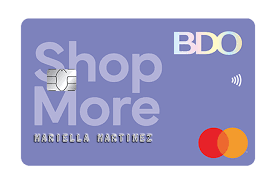
The BDO ShopMore Mastercard offers enhanced rewards and shopping benefits, making it ideal for frequent shoppers and those who prefer flexible payment options.
RCBC Visa Platinum

- Earn one Preferred Air Mile for as low as ₱25 per spend
- Convert your AIRMILES into mileage point at 1:1 rate
- Access to world-class airport lounge
- Up to ₱5 Million Travel Insurance Coverage and other travel benefits
- Up to 100% temporary increase in credit limit during travel period
- Ideal for frequent travelers
BDO Unibank Personal Loan
BDO Unibank’s Personal Loan offers unsecured financing of up to ₱2 million with a fully digital or branch-assisted application process. It’s an accessible cash option for immediate needs like debt consolidation, travel, events, and other lifestyle expenses. With competitive rates starting at 0.98% monthly add-on and flexible repayment up to 36 months, it’s a solid choice for salaried and self-employed individuals.
BPI Personal Loan
Need a cash boost for life’s big moments or unexpected emergencies? The BPI Personal Loan offers a reliable and flexible solution—whether you’re funding a small business, covering tuition, or consolidating debt. With competitive rates, fixed monthly payments, and a fast approval process, this loan is designed to fit your goals and your lifestyle. No collateral required, just straightforward access to funds when you need them most.
EastWest Personal Loan

Unsecured personal loan designed for flexible multi-purpose use—whether for tuition, travel, or business needs. Offers terms up to 60 months and competitive add-on rates.