




You’re 35. You own your car—fully paid in cash. You have savings. You’ve never owned a credit card. Yet when you finally apply for a credit card, the bank’s system may treat you as riskier than a 21-year-old earning ₱15,000 a month with existing debt. That can feel frustrating—and even embarrassing. You might wonder, “Am I the only one my age without a credit card?” The truth is, you’re not. Many Filipino adults remain credit-invisible well into their 30s and 40s—not because they’re irresponsible, but because they were raised in a cash-first culture where avoiding debt was considered a virtue.
There’s a common myth that a credit card is only for young people trying to “build history” early. But starting your first credit card at 30+ can actually be an advantage—if you approach it strategically. At this stage, you likely have stable income, years of employment history, clearer financial goals, and stronger impulse control. Those traits matter far more to long-term credit success than simply starting young. A credit card, when used intentionally, becomes a financial tool—not a lifestyle upgrade.
This guide will walk you through the hidden advantages of being a late credit card starter, the smartest application strategies for applicants in their 30s and beyond, the best first credit card options in the Philippines, and a practical three-year plan to build strong credit efficiently. You’re not behind—you’re simply starting at a more stable and self-aware stage of life. And with the right information and comparisons from platforms like Finmerkado, you can choose a credit card that aligns with your goals and build your credit story with confidence.
The Late Starter Advantage
1. Income Stability
By your 30s, many Filipinos earn between ₱30,000–₱80,000 monthly—significantly higher than entry-level salaries. More importantly, you likely have 5–10 years of employment history versus a fresh graduate’s 0–2 years.
To a bank, that signals:
- Lower default risk
- Predictable income
- Financial maturity
Even without credit history, stable income matters.
2. Better Impulse Control
Neuroscience tells us the prefrontal cortex—the part of the brain responsible for rational decision-making—is fully developed by the mid-20s. By 30+, most people are less prone to impulsive spending.
You’ve likely:
- Seen friends struggle with debt
- Experienced financial mistakes
- Learned budgeting the hard way
Older first-time cardholders tend to have lower delinquency rates because their spending is purpose-driven—not lifestyle inflation-driven.
3. Clearer Financial Goals
At 21: “I want to build credit.”
At 35: “I want to buy a house in three years.”
That difference matters.
When your goal is concrete—mortgage approval, business capital, car financing—you treat your credit card as a tool, not a toy.
4. Thin File ≠ Bad File
A “thin file” simply means limited credit history. It does not mean damaged credit.
You have:
- No late payments
- No collections
- No defaults
Banks prefer a clean slate over a repair job. Building from zero is far easier than rebuilding from negative.

Why You Don’t Have Credit History (And Why That’s OK)
The Cash Culture
Many Filipino families raised us with: “Utang is bad.” Debt avoidance was a sign of discipline and dignity.
Previous generations lived fine without credit cards. You weren’t being irresponsible—you were being cautious.
The Debit Preference
“If I don’t have cash, I don’t buy it.”
That’s responsible behavior. But debit cards, GCash, and Maya don’t build traditional credit history. You’ve been financially active—just not credit-visible.
OFW or Time Abroad
If you worked overseas, your foreign credit history doesn’t automatically transfer back to the Philippines. You may return financially stable—but locally invisible.
Past Financial Trauma
Family bankruptcy. Business failure. Medical debt.
Choosing cash-only after a difficult experience is self-protection—not failure.
Credit is a tool, not a virtue. Deciding when to use it is wisdom.

The Application Strategy for 30+
1. The Secured Card Stepping Stone
Secured cards are not a stigma. They are credit-building tools.
BPI Express Start Program
- ₱10,000 deposit = ₱10,000 limit
- 6–12 months before graduation eligibility
Security Bank Fast Track
- ₱10,000–₱100,000 hold
- Automatic review at 6 months
Strategy:
- Use for 6 months
- Keep utilization below 30%
- Request graduation
- Apply for unsecured card
2. The Payroll Backdoor
If you’re employed, ask HR about bank partnerships.
Banks like Bank of the Philippine Islands, Metrobank, and Security Bank often favor their payroll clients.
Sometimes, 3 months of employment and stable deposits are enough—even without credit history.
3. The Branch Application Advantage
Online applications rely on algorithms. No history = automatic rejection.
In-person applications allow human underwriters to consider:
- Age
- Income
- Employment tenure
- Savings behavior
Bring:
- ITR (even if minimal tax)
- Certificate of Employment
- Bank statements
- Utility bills
And be clear:
“I’m establishing credit for a mortgage in 2 years.”
That signals seriousness.
4. The Credit Builder Loan Combo
Some lenders offer small installment loans alongside credit cards.
Loan builds installment history.
Card builds revolving history.
Pay the loan aggressively. Keep the card low. Two positive tradelines build faster credibility.

Best First Cards for Older Starters

Building Credit Fast at 30+
The Authorized User Strategy
A spouse or parent with 5+ years of good history can add you as supplementary. Their history may strengthen your profile—but choose carefully.
The Credit Builder Loan
Borrow ₱20,000.
Place it in savings.
Auto-debit payments.
Result: Paid loan history + preserved capital.
The 30% Rule
If your limit is ₱10,000:
- Keep balance below ₱3,000
- Let statement generate
- Pay in full before due date
Request limit increases every 6 months.

The 3-Year Plan
Year 1: Establishment
Months 1–6: Starter or secured card, perfect payments.
Months 6–12: Graduate, request limit increase to ₱50K.
Goal: Strong foundational score.
Year 2: Expansion
Month 12: Apply for second card.
Month 18: Add installment loan for credit mix.
Goal: ₱100K+ total limit.
Year 3: Optimization
Month 24: Upgrade to prime cards.
Month 30: Pre-approval for mortgage.
Month 36: Secure home loan at better rates.
Stability + history = negotiating power.

Conclusion
Starting your first credit card at 30+ isn’t a delay—it’s timing. You now have income stability, financial maturity, clearer long-term goals, and the discipline that many younger credit card holders are still developing. That combination can actually help you build stronger credit, faster and more sustainably. You’re not behind anyone—you’re simply building with intention. When you’re ready, compare your starter credit card options through trusted platforms like Finmerkado and begin your credit journey on your own terms.
Frequently Asked Questions

No. Getting your first credit card at 30+ is completely normal. In fact, older applicants often have more stable income and clearer financial goals, which can help them build credit more responsibly than younger first-time cardholders.
Not necessarily. Having no credit history (a “thin file”) is different from having bad credit. Many banks offer starter or secured credit card options specifically designed for first-time applicants.
The best credit card depends on your income, employment type, and goals. Secured credit cards, no-annual-fee cards, and payroll-partner bank cards are often good starting points for applicants in their 30s and 40s.
Keep your credit card usage below 30% of your limit, always pay in full and on time, and request a credit limit increase after six months of good payment history. Consistency is more important than speed.
Yes. With 2–3 years of responsible credit card usage, stable income, and no late payments, many applicants improve their approval chances and qualify for better interest rates on home loans.


Metrobank M Free Card

- NO annual fee for life
- NO minimum spent requirement
- Worldwide acceptance 0% installment programs
- Exclusive Promotions and Offers
- Ideal for those looking to maximize financial control and convenience
RCBC Flex Gold Visa

- 2X Rewards points on three preferred categories
- Change your preferred categories once every billing cycle
- Flexible Rewards redemption options (shopping vouchers, cash rebates and more)
- Free Travel Insurance & Purchase Protection
- Get access to the Marhaba/Skyview Airport Lounge
- Free budget monitoring tools
- Ideal for young professionals
AUB Easy Mastercard
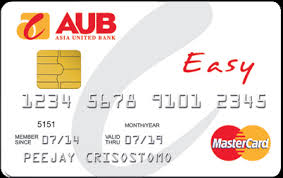
Perfect for first-time cardholders seeking simplicity and convenience
BPI Personal Loan

Need a cash boost for life’s big moments or unexpected emergencies? The BPI Personal Loan offers a reliable and flexible solution—whether you’re funding a small business, covering tuition, or consolidating debt. With competitive rates, fixed monthly payments, and a fast approval process, this loan is designed to fit your goals and your lifestyle. No collateral required, just straightforward access to funds when you need them most.
Chinabank Personal Loan

Chinabank’s Easi‑Funds Personal Loan (via China Bank Savings) offers unsecured financing of up to ₱1 million, positioned similarly to peer offerings. It carries an add‑on interest rate of approximately 1.3%–1.5% monthly, translating to an estimated APR of 16%–19% depending on loan tenure and credit profile. Tenure options generally range from 12 to 36 months, while approval often comes within 3 to 5 banking days. Being backed by Chinabank’s extensive branch network and digital infrastructure, it combines legacy banking strength with modern convenience.
Metrobank Personal Loan

Need extra funds for emergencies, education, or big life purchases? The Metrobank Personal Loan offers flexible borrowing terms and quick processing—all from one of the country’s most established and reputable banks. With no collateral required and fixed monthly payments, it’s a convenient solution for salaried individuals looking to take control of their finances.