
The Freelancer’s Financial Safety Net: Emergency Fund Strategies for Irregular Income Earners (Philippines 2026)

When Your Income Doesn’t Follow a Calendar
It’s June 15. You land a ₱45,000 project that takes three weeks to finish. Relief sets in—until July arrives, the work is done, the invoice is sent, and payment is still 30 days away. Suddenly, you’re juggling rent, groceries, and internet bills while waiting for the next client to reply, often relying on savings or a credit card just to bridge the gap. If this feels familiar, it’s because it’s a common reality for Filipino freelancers.
By 2026, around 9.9 million Filipinos—about 22% of the workforce—are part of the gig economy, where income swings of 30% or more are normal. Some months bring ₱80,000, others barely ₱12,000, yet most financial advice still assumes steady paychecks and employer benefits freelancers don’t have. While many independent workers plan for retirement, far fewer have enough liquid savings to handle delayed invoices or emergencies without stress. That’s where a freelancer-specific emergency fund comes in. This guide breaks down a practical system for irregular income earners—how much to save, where to keep it, how to manage feast-or-famine cycles, and which tools, including savings accounts and credit card options that don’t require payslips, can support your safety net.
The Traditional Emergency Fund Myth
You’ve probably heard it before:
“Save 3–6 months of expenses.”
That advice works for salaried employees with predictable income. For freelancers, it often falls apart.
Here’s why:
- Your income changes month to month
- You experience feast-or-famine cycles (₱80K one month, ₱12K the next)
- BIR quarterly tax payments (Form 2551Q) create sudden cash drains
- Clients regularly pay 30–60 days late
- You don’t get HMO, paid leave, or a 13th month bonus
Even popular budgeting frameworks like the 50/30/20 rule assume stable cash flow. But when your “50% needs” fluctuate wildly, fixed budgets stop making sense.
The Freelancer Reality Check
As a freelancer:
- You can’t predict next month’s income
- Tax obligations come in lumps (January, April, July, October)
- Client delays are common, not exceptional
- There’s no employer safety net
Trying to fit yourself into an employee-style financial plan only leads to frustration.
The solution isn’t discipline—it’s design.
You need a system that flexes with your income instead of fighting it.
Instead of relying on a generic rule, freelancers benefit from a layered approach.
The Three-Layer Safety Net System
Layer 1: Bare-Bones Baseline (3 Months)
Start by calculating your minimum survival expenses:
- Rent
- Utilities
- Basic food
- Transportation
- Internet / mobile data
This is not your full lifestyle budget—just what keeps you afloat.
Example:
₱18,000/month × 3 months = ₱54,000
That’s your baseline.
Layer 2: Volatility Buffer (1–3 Additional Months)
Next, account for income swings.
Add one extra month of expenses for every 20% of income volatility.
- 20% swing → +1 month
- 40% swing → +2 months
- 60% swing → +3 months
If your earnings fluctuate significantly, your total target becomes 5–6 months of bare-bones expenses.
Layer 3: Tax Smoothing Account (Separate From Emergency Fund)
Freelancers also need a dedicated tax buffer.
Set aside 25% of every client payment into a separate account for BIR obligations. This prevents panic when quarterly deadlines arrive.
This isn’t technically part of your emergency fund—but it’s just as essential.
Your Freelancer Target
Most freelancers in the Philippines should aim for:
6–8 months of bare-bones expenses
That’s higher than salaried workers because:
- Your income is unpredictable
- Payments arrive late
- You shoulder all benefits yourself
It sounds intimidating—but you build it gradually.
Accessibility matters just as much as interest.
Here’s a sample comparison of popular savings options freelancers use in 2026:
| Product | Type | Min Balance | Interest Rate | Access Speed | Best For |
|---|---|---|---|---|---|
| Maya Savings | Digital wallet | ₱0 | ~3.5% p.a. | Instant | Daily liquidity |
| CIMB UpSave | Digital bank | ₱0 | Up to ~7.5% p.a. | 1–2 days | Higher-interest storage |
| ING Save | Digital bank | ₱0 | ~6.5% p.a. | 1 day | International clients |
| Tonik Time Deposit | Neobank | ₱5,000 | ~6.5% p.a. | Locked until maturity | Funds you won’t touch |
| BPI Save-Up | Traditional | ₱3,000 | ~0.06% | Same day | Branch access |
| UnionBank Personal Savings | Hybrid | ₱10,000 | ~0.10% | Instant | App + branch |
| GCash GSave | E-wallet | ₱0 | ~2.6% p.a. | Instant | GCash users |
How Freelancers Should Choose
Look for:
- Instant access for true emergencies (Maya, GSave)
- Higher interest for money you won’t touch often (CIMB, Tonik)
- No maintaining balance
- Auto-transfer features
Pro tip: Split your fund.
Keep one month of expenses in an instant-access wallet. Store the rest in a higher-interest digital bank. You get liquidity and growth at the same time.

Use Percentage-Based Budgeting
Forget fixed peso amounts.
Instead, allocate percentages:
- 50% needs
- 20% wants
- 30% taxes + savings
In a ₱20K month, you save ₱6K. In a ₱60K month, you save ₱18K.
Same system. Different outcomes.
The Artificial Paycheck Method
Create a “salary” for yourself:
- Open a personal account
- Calculate your 6-month average income
- Pay yourself that amount monthly
Extra earnings stay in your business account. During slow months, you draw from the surplus.
This stabilizes your personal finances even when client work fluctuates.
Simple Automation Hacks
- GCash auto-transfer: send 15% of incoming funds to GSave
- Maya goals: allocate savings instantly
- Calendar alerts before BIR deadlines
- Invoice immediately and follow up at Day 15
- Require 50% upfront for new clients
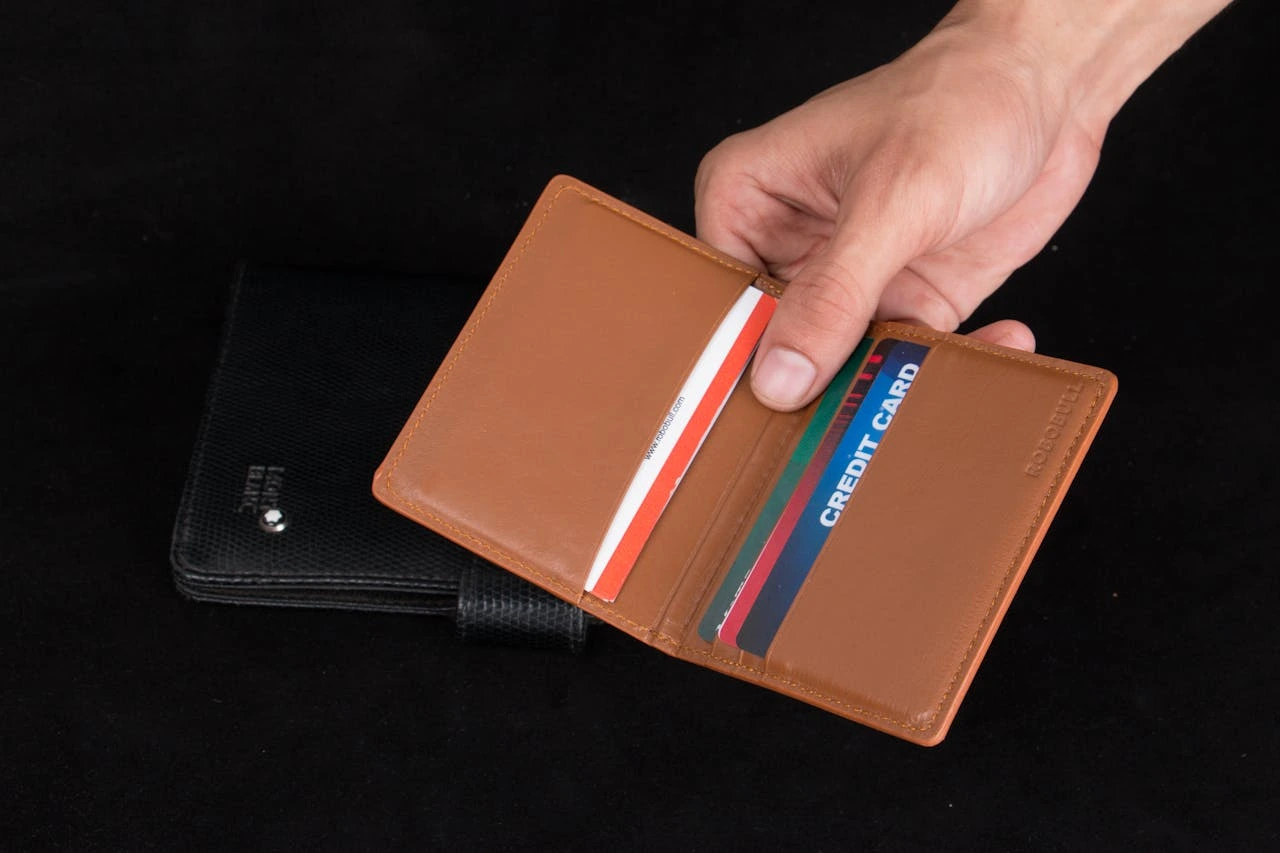
Building Credit Without Employer Documents
Most banks ask for payslips. Freelancers don’t have them.
That’s where secured credit cards come in.
Popular options include:
- RCBC InstaCard – ₱2,000 deposit, no annual fee
- AUB Easy-Start – ₱5,000 deposit, zero annual fee for life
- UnionBank Secured Card – ₱5,000 deposit, waived first year
How they work:
You deposit money as collateral. Your credit limit is based on that amount.
Why this matters:
- Builds CIC credit history
- Helps you qualify for future loans
- Deposit is refundable
- After 6–12 months, you can upgrade to unsecured cards
Use bank statements and client contracts when applying.
Insurance: Protecting the Safety Net Itself
One accident can erase months of savings.
Freelancers don’t have employer HMO, so basic coverage matters.
Start with:
- Personal accident insurance: ₱500–₱1,500/year
- PhilHealth voluntary membership
- Private health rider: ₱8K–₱15K/year
- Critical illness coverage: ₱1M for ₱12K–₱18K/year
Strategy:
Begin with accident insurance + PhilHealth. Add critical illness once income stabilizes.

Month 1: Foundation
- Open emergency fund account (CIMB or Maya)
- Set 15% auto-transfer
- Calculate your target
- First goal: ₱10,000
Month 2: Acceleration
- Send 50% of any surplus to savings
- Review upcoming BIR payments
- Open tax savings account
- Goal: ₱25,000
Month 3: Protection
- Apply for secured credit card
- Research insurance options
- Adjust automation
- Goal: ₱40K–₱50K starter fund
Progress typically looks like:
₱0 → ₱50K → ₱100K → Full 6-month target

Final Thoughts: Your Income Is Variable—Your Security Doesn’t Have to Be.
Freelancers play by different financial rules. Instead of the traditional 3–6 month buffer, aim for 6–8 months of bare-bones expenses, use percentage-based budgeting that flexes with your income, and split your savings between instant-access funds and higher-interest accounts. Build your credit history even without payslips, and protect what you’ve saved with basic insurance coverage. Your next client payment may be unpredictable—but your financial security doesn’t have to be. Start small, automate what you can, and build momentum over time. And when you’re ready, you can explore savings accounts and secured credit cards side-by-side on Finmerkado to find tools that fit your freelance setup, no employer documents required.